New Construction Backyard Landscaping in Queen Creek (2026 Guide)
If you just closed on a new build in Queen Creek and your backyard is still a flat patch of dirt, this is the playbook. What it actually costs to go from dirt to done, the order things have to happen in, the builder-handoff gotchas, and the HOA approval timeline.
You just got the keys to a brand new home in Queen Creek. The inside is gorgeous. The kitchen is upgraded. The bedrooms are big. And the backyard is a flat rectangle of compacted dirt with a single hose bib and maybe an 8x12 slab patio if your builder threw one in. Now what?
This is the question every new construction homeowner in Queen Creek asks within the first month of moving in, and it is one of the few moments in homeownership where the decisions you make in the next few weeks lock in 10 to 20 years of outdoor experience and resale value. This guide walks new construction backyard landscaping in Queen Creek from the moment your builder hands over the dirt all the way to the finished install: realistic 2026 pricing, the order operations actually have to happen in, the gotchas builders never mention, and the HOA approval timeline that catches most new owners by surprise.
What your builder actually gave you (and what's missing)
The first thing to understand about a new build in Queen Creek is exactly what scope of work your builder did and did not include. Most national builders in the area (Lennar, Taylor Morrison, KB Home, Ashton Woods, William Ryan, Meritage, DR Horton) deliver the backyard at a similar baseline. Knowing what is there saves you from accidentally paying twice for things.
What your builder typically did include:
- Rough grading of the lot, sloped away from the foundation per code (this is often the bare minimum needed for permitting, not what you actually want long-term)
- Block perimeter wall on the property line, usually with a few service gates
- One or two hose bibs on exterior walls
- A basic concrete patio slab (typical size 100 to 250 sq ft) attached to the back of the house
- Maybe a sleeve or two under the slab if you got lucky and your builder ran future-irrigation conduit
What your builder did NOT include (this is where the costs hit):
- Irrigation main line, valve manifold, controller, or any drip emitters
- Drainage emitters, French drains, or any sub-surface drainage beyond the foundation slope
- Plants, trees, decorative rock, or any ground cover
- Turf of any kind
- Additional hardscape (paver patios, walkways, stepping stones, fire pits, pergolas, ramadas, outdoor kitchens)
- Landscape lighting, exterior outlets beyond the standard one or two, or low-voltage runs
- Mature trees or shade of any kind
- Side yard cleanup (most builders leave side yards in a near-construction state)
The gap between what you got and what you want is what your landscape budget covers. Most Queen Creek homeowners we work with end up spending more on the backyard install than the builder spent on the patio slab and grading combined.
Realistic 2026 pricing for new construction backyard landscaping in Queen Creek
Three tiers cover the vast majority of new-build backyards we install in Queen Creek. The bottom of each range assumes a smaller lot (around 1,500 sq ft of backyard area) and the top of each range assumes a larger lot (3,000+ sq ft, common in newer Encanterra and Eastmark sections).
Starter Family Backyard ($20,000 to $35,000) is what most first-time homeowners or families with kids start at. You get 800 to 1,200 sq ft of turf, a 200 to 400 sq ft paver patio extension off the builder slab, 15 to 20 desert-adapted plants and one specimen tree, a smart drip irrigation system, low-voltage path lighting, and side yard cleanup with decorative gravel. This tier covers a fully usable backyard your family lives in.
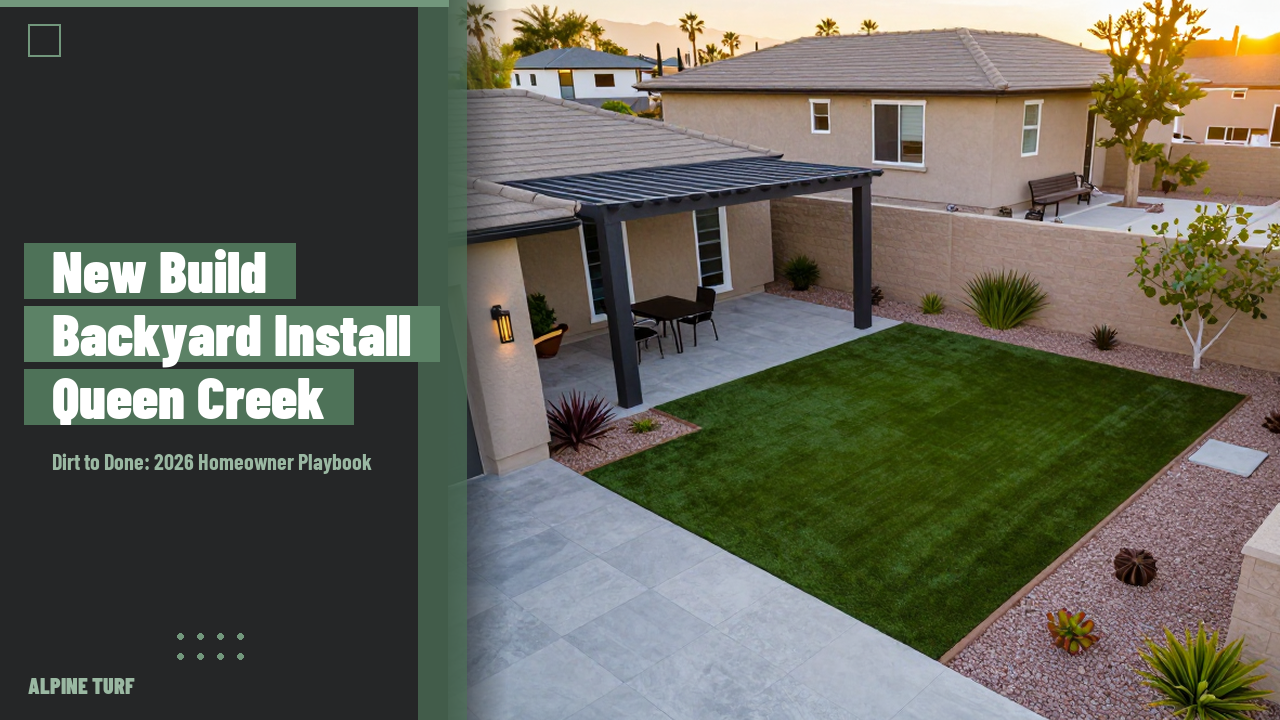
Full Family Build ($35,000 to $60,000) is the most common tier we install in Queen Creek. Adds a real shade structure (pergola or covered patio extension), built-in gas fire pit or fire feature, 1,200 to 1,800 sq ft of premium turf with cooling infill, 600 to 900 sq ft of paver hardscape in upgraded materials, a fuller plant palette with multiple specimen plants, and dedicated drainage for monsoon season. This is the build that holds value at resale.
Custom Outdoor Living ($60,000 to $120,000+) is for larger lots (Encanterra, Sun Lakes neighbors, parts of Ovation and Eastmark) and owners who plan to entertain regularly. Adds an outdoor kitchen, a full-roof ramada or extended covered patio, water and/or fire feature, multiple distinct zones (lawn, dining, lounge, putting green, garden), 30+ specimen plants, smart-home irrigation, and architectural landscape lighting.
Pools are a separate trade and a separate budget. New construction pools in Queen Creek typically run $50,000 to $120,000 on their own and add 6 to 12 months to the overall yard timeline. Most homeowners we work with sequence landscape after the pool is in (or build around an existing pool placement), not the other way around.
The correct order of operations for a new-build install
This is where new owners cost themselves money. Landscape installs have a strict order, and doing things out of sequence means tearing up finished work to add what should have been there from the start. The right sequence:
- Design and HOA submission. Before any work begins, finalize the design with your installer, lock in plant palette and hardscape materials, and submit the package to your HOA. Most Queen Creek HOAs review monthly. Building the design first also lets you finalize where conduit and irrigation sleeves need to run.
- Grading and drainage. Builders rough-grade to drain away from the foundation, not to drain the lot properly for landscape. New construction yards in Queen Creek typically need re-grading, French drains in low spots, and emitter drains run to the street or a sub-surface basin. This is the foundation of everything else.
- Irrigation main and valve manifold. The water main from the hose bib (or a new dedicated tap from the city water line) gets trenched in before any hardscape goes down. The valve manifold and smart controller also get installed at this stage.
- Conduit and electrical sleeves. Any future low-voltage lighting, outlet runs, or gas lines for fire features and outdoor kitchens get sleeved at this stage. Sleeving cheap conduit now beats jackhammering pavers later.
- Hardscape. Paver patios, walkways, fire pit pads, pergola footings, and any concrete or stone elements. Hardscape sets the bones of the yard.
- Structures. Pergolas, ramadas, outdoor kitchens, and shade structures get installed once hardscape is set.
- Drip irrigation and plants. Drip lines and emitters get run in the planting zones, then trees, shrubs, and ground cover go in. Plants are installed last because they are the most vulnerable to construction damage.
- Turf. Artificial turf goes in after plants because it is the cleanest, most damage-prone surface. Crushed-granite base, infill, seam tape, and the roll itself need a finished site to install correctly.
- Lighting and final electrical. Low-voltage lights get pulled through the sleeves installed in step 4 and connected to transformers. Final controller programming and walk-through.
An experienced installer manages this sequence as one coordinated project. Homeowners who try to general-contract the install themselves often save 10 to 15 percent on labor and lose 25 to 40 percent on rework when the sequence breaks down.
Builder handoff gotchas that catch new owners
Builders are not landscape contractors. The way they hand off the yard creates a handful of surprises that show up in your install budget.
Compaction. Construction equipment and fill dirt compact the backyard soil into something close to concrete. New plants struggle in compacted soil, and drip irrigation can pool because water cannot infiltrate. A proper install includes loosening or amending the top 6 to 12 inches of soil in planting zones, which adds to the labor budget.
Construction debris. Trash, stucco crumbs, plastic ties, lumber offcuts, and small rocks live in the top few inches of your dirt. Cleaning this out before plants and turf is a real line item, not a free perk.
Slope vs. drainage. Builders slope the yard away from the house. They do not solve where that water goes after it leaves the foundation. In Queen Creek's clay and caliche soil, that means water pools 10 to 15 feet from the house during monsoon, drowning plants and rotting turf. Real drainage (emitters routed to the side yard or street, French drains in low spots) is usually a separate $1,500 to $4,000 line item.
Hose bib location. Your builder gave you one or two hose bibs in convenient locations for the builder, not for the irrigation main you actually need. Sometimes the existing bib works as the irrigation source; often you need a new dedicated water tap, which requires permit and city inspection. Budget $400 to $1,200 if a new tap is needed.
Side yards. Most builders leave side yards in near-construction condition. Cleaning them up, adding gravel or pavers, and tying them into the front and back landscape design is a real cost that catches owners who only budgeted for the main backyard.
Queen Creek HOA approval for new construction landscaping
Most Queen Creek HOAs require landscape completion within a specific window after closing, typically 6 to 12 months. Hastings Farms, Eastmark, Encanterra, Meridian, Ovation, Cortina, Spur Crossing, and most of the active Queen Creek HOAs all have a written landscape standard with required plant palettes, hardscape limits, and approval timelines. The Town of Queen Creek Planning Department sets community-wide landscape and zoning standards that apply on top of HOA rules.
What HOAs typically require:
- A submitted landscape plan showing plant palette, hardscape layout, turf area, and tree placement
- Minimum live plant coverage (usually 30 to 50 percent of landscape area at maturity)
- Approved tree species and a minimum tree count per lot
- Approved decorative rock colors and sizes
- Limits on artificial turf square footage and visible synthetic seams
- No prohibited plants (fountain grass, certain palms, oleander in some communities)
- Limits on front-yard visibility of hardscape colors that clash with the community palette
Timeline: Plan on 2 to 4 weeks for HOA review, sometimes longer if your HOA only reviews monthly. We submit the design package as part of every Queen Creek install at no extra cost, and we have a near-100% approval rate because we know what each major HOA wants before the package goes in.
Typical timeline from contract to walk-through
Most new construction homeowners we work with want to know when they will actually be sitting on their finished patio. Realistic timelines for a Queen Creek new-build install:
- Initial consult to signed contract: 1 to 2 weeks (design revisions, quote tuning)
- HOA submission to approval: 2 to 4 weeks (runs concurrent with final design)
- Material lead times: 1 to 3 weeks (pergola steel, custom pavers, specimen trees on order)
- Active install on site: 2 to 4 weeks for full family build, 4 to 6 weeks for custom outdoor living
- Final walk-through and irrigation tuning: 3 to 5 days after install completion
Total: most full backyards finish 6 to 10 weeks from initial consult. Custom outdoor living builds with kitchens and ramadas run 8 to 14 weeks. Pools, when sequenced before landscape, add another 4 to 8 months to the overall timeline.
What Alpine Turf handles for new-construction homeowners
The big reason new construction homeowners hire a single full-service installer instead of stringing together separate contractors is that the install requires coordinated trades. Alpine Turf bundles the entire scope under one project manager.
- Design with 3D rendering so you see the finished yard before any work starts
- HOA submission package and follow-through on approval
- Grading, drainage, and re-compaction correction
- Irrigation main, valve manifold, smart controller, and drip lines
- Conduit and sleeve runs for future and current lighting and electrical
- All hardscape: paver patios, walkways, fire pits, retaining walls
- Pergolas, ramadas, outdoor kitchens, and shade structures
- Plants, trees, and ground cover from the HOA-approved palette
- Premium artificial turf with cooling infill for AZ heat
- Low-voltage lighting throughout
- Final irrigation programming and homeowner walk-through
We work in every active new-construction neighborhood in Queen Creek, including Hastings Farms, Spur Crossing, Encanterra, Ovation, Meridian, Eastmark, Cortina, and the surrounding San Tan Valley developments.
How to get started on your new-build install
The two best windows to install a new-construction backyard in Queen Creek are October through April (cool installation weather, fastest plant establishment) and mid-summer if you can stomach the install heat (fastest scheduling because demand is lower).
Recommended sequence:
- Confirm your HOA closing window for landscape (most are 6 to 12 months after closing).
- Walk your yard with a tape measure, sketch rough dimensions, note where existing hose bibs and outlets are.
- Book a free on-site design consult with Alpine Turf. We measure exactly, walk through tier options, and quote within 10 to 15 percent on the first visit.
- Lock the design and material selections. We submit to the HOA and finalize the quote.
- Schedule the install. Most Queen Creek new-builds finish 6 to 10 weeks after contract.
If you want to see what is possible on your specific lot before committing, that first consult is free and includes a rough tier estimate based on your lot size and what your HOA requires. From there you decide whether you want a Starter Family build, a Full Family build, or a Custom Outdoor Living build.
Frequently asked questions
How much does a new construction backyard cost in Queen Creek?
Starter Family builds run $20,000 to $35,000 and cover turf, a paver patio extension, basic plants, irrigation, and lighting. Full Family builds at $35,000 to $60,000 add pergola, fire pit, fuller plant palette, and drainage. Custom Outdoor Living at $60,000 to $120,000+ adds outdoor kitchen, ramada, water and fire features, and specimen plants. Pricing scales with lot size; bigger lots in Encanterra and Eastmark push toward the top of each range.
Why does a new construction backyard cost more than a remodel?
A new build starts as flat compacted dirt with no irrigation, no plants, no drainage, and only a builder slab patio. You are paying for everything from the ground up: re-grading, drainage, irrigation main and valves, hardscape, plants, turf, and lighting. A remodel inherits an existing patio, working irrigation, established trees, and a finished base layer. Plan on $20,000 minimum to make a new-build Queen Creek backyard genuinely usable.
What order do new-construction landscape projects have to happen in?
Design and HOA approval first. Then grading and drainage, irrigation main and valves, conduit and electrical sleeves, hardscape, structures like pergolas and outdoor kitchens, drip irrigation and plants, turf last, and lighting last. Doing these out of sequence means tearing up finished work to add what should have been there from the start.
How long do I have before my HOA requires landscaping to be done?
Most Queen Creek HOAs require landscape completion within 6 to 12 months of closing. Hastings Farms, Eastmark, Encanterra, Meridian, Ovation, Cortina, and Spur Crossing all have a written landscape standard with required plant palettes, hardscape limits, and a specific completion deadline. Plan to start design and HOA submission within the first month of closing to stay ahead of the timeline.
Does the builder do any landscaping on a new construction home in Queen Creek?
Builders deliver a rough-graded dirt yard, the perimeter block wall, one or two hose bibs, and a small concrete patio slab. They do not include irrigation, plants, trees, drainage emitters, turf, decorative rock, or any hardscape beyond the slab. The entire landscape install is on the homeowner.
When is the best time of year to install a new construction backyard in Queen Creek?
October through April is ideal: cool installation weather is easier on the crews and plants establish much faster in mild temperatures. Summer installs are absolutely possible (we install year-round) and often have faster scheduling because demand is lower, but new plants need extra attention during the establishment period. Avoid scheduling final plant install during the worst stretch of July monsoon when newly planted trees can topple in storms.
Get your Queen Creek new-build install quote
We design and install full backyards for new construction homes across Queen Creek, San Tan Valley, Gilbert, and the rest of the East Valley. Free on-site consult, tiered quote, and we handle HOA submission as part of every project.
Book your free quote →