Artificial Turf Maintenance Arizona: The Real 2026 Cleaning Guide
Artificial turf is built to last 10 to 15 years in Arizona, but only if you treat it right. Here is the real weekly, monthly, and seasonal maintenance routine East Valley homeowners actually need, the pet-odor fix that works, and the mistakes that quietly void your warranty.
You installed artificial turf so you would stop mowing, stop watering, and stop fighting dead patches every August. That part is true — but "low maintenance" does not mean "no maintenance," and the East Valley sun, monsoon dust, and backyard dogs all put real demands on a turf lawn that a lot of installers gloss over on install day. If you are searching artificial turf maintenance Arizona because your lawn smells off, looks flat, or you just want to do this right from day one, here is the actual routine that keeps a turf install looking new for its full 10 to 15 year lifespan instead of fading and flattening by year four.
This guide covers the real weekly and monthly routine, the pet-odor fix that actually works (not just the ones that mask the smell for a day), how monsoon season and summer heat each affect turf differently, and the handful of common mistakes that void a manufacturer warranty without homeowners realizing it.
Artificial Turf Maintenance Arizona: Weekly & Monthly Routine
Most artificial turf maintenance Arizona homeowners need boils down to a short, repeatable routine. Skip the expensive gadgets and specialty products for a normal residential lawn — a hose, a stiff-bristle broom, and a leaf blower cover 90% of what your turf needs.
- Weekly: Blow or sweep off leaves, twigs, and loose debris before they get ground into the fibers by foot traffic.
- Every 1–2 weeks: A quick rinse with a garden hose and spray nozzle knocks down dust, pollen, and light surface grime that builds up fast in Arizona's dry, dusty air.
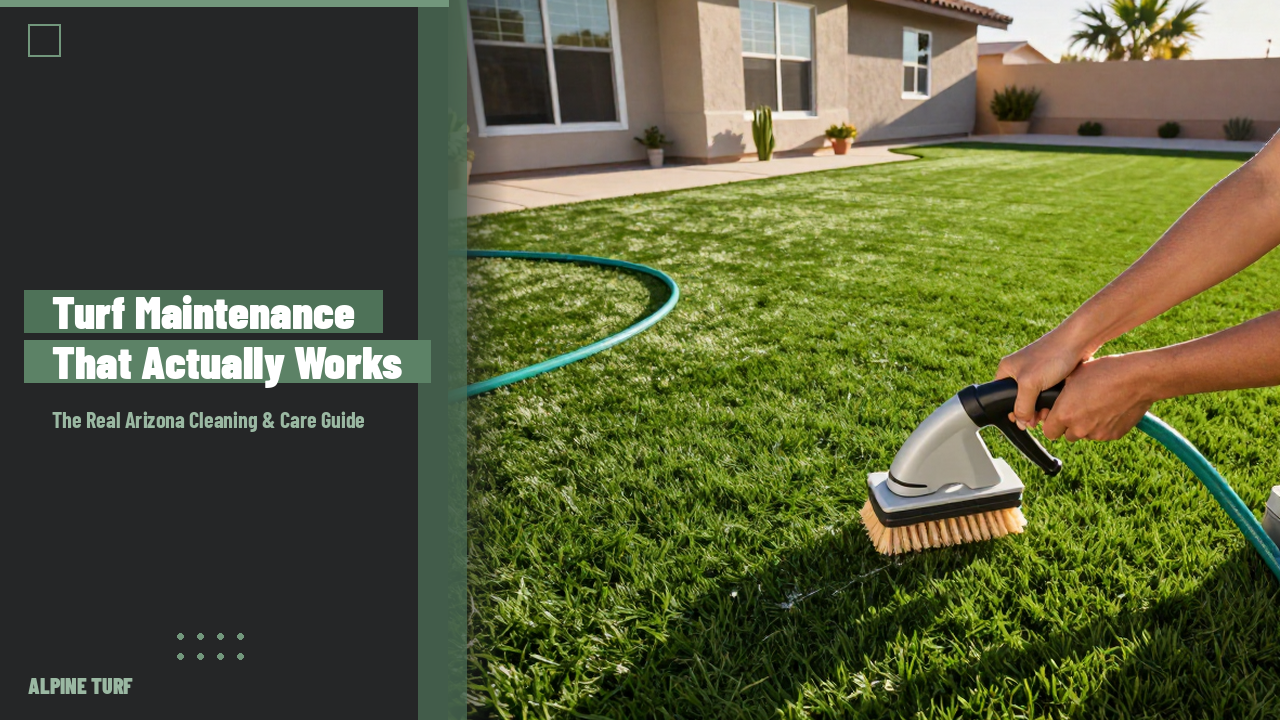
- Monthly: Brush against the grain with a synthetic-bristle push broom (never metal) to lift flattened fibers back upright, especially in high-traffic paths and under furniture.
- Monthly: Check infill levels in high-traffic zones. If sand or rubber infill looks visibly low or fibers feel thin underfoot, it's time to top off.
- Quarterly: Inspect seams and edges for lifting, especially after a hot summer or a heavy monsoon storm.
Why Brushing and Infill Matter More Than Homeowners Expect
Turf fibers are engineered to stand upright, but foot traffic, furniture, and pets constantly push them flat. Brushing against the grain redistributes infill and lifts the fiber back to its natural angle — it is the single biggest factor in whether a turf lawn looks new after 5 years or looks worn and matted after 18 months.
Infill (sand or rubber granules between the fibers) does three jobs: it weighs the turf down so it does not shift, it helps fibers stay upright, and it absorbs impact. Infill migrates over time from foot traffic, rain, and normal wear, especially in high-traffic paths like gates, walkways, and pet run zones. Topping off infill in those specific spots — not the whole yard — is a routine part of ownership, not a sign something went wrong with the install.
The Real Fix for Pet Urine Odor
This is the single most common complaint we hear from East Valley turf owners with dogs, and it is almost always fixable without replacing anything. Urine odor develops because bacteria break down the urea in urine into ammonia, and Arizona heat above 100°F accelerates that bacterial activity significantly — which is why odor complaints spike every summer.
The routine that works
- Rinse pet-use areas daily to every few days in summer, not just weekly. This is the single biggest factor in odor control — diluting urine before bacteria can fully break it down.
- Use an enzyme-based turf deodorizer, not bleach or ammonia-based household cleaners. Enzyme cleaners neutralize the bacteria producing the odor instead of just masking the smell.
- Consider a zeolite or antimicrobial infill in pet-heavy zones. These infill types are specifically designed to trap and neutralize ammonia rather than let it sit in standard sand.
- Check drainage in the affected spot. If the same corner always smells worse, standing moisture under the turf backing (from poor drainage prep at install) can be compounding the problem — this is worth a professional look if rinsing alone doesn't resolve it.
Monsoon Season and Dust: What Changes
Arizona's monsoon season (roughly June through September) throws two different problems at turf: heavy blowing dust between storms, and sudden intense rainfall during them. Both call for a slightly different approach than the rest of the year.
| Condition | What Happens | What to Do |
|---|---|---|
| Blowing dust (pre-storm) | Fine dust settles into fibers and infill, dulling color and clogging drainage pores | Rinse more frequently during active dust periods — every few days instead of every 1–2 weeks |
| Heavy rain (during storm) | Turf drains fast if the base was built correctly; standing water signals a drainage problem | Check for pooling 30–60 minutes after a storm; persistent standing water needs a professional look at the base |
| Post-storm debris | Leaves, small branches, and mud get tracked or blown onto the lawn | Blow off debris promptly — wet debris left to sit can stain fibers or encourage mold in shaded areas |
A properly installed turf base with adequate drainage should shed monsoon rain within an hour. If your yard holds water longer than that after a storm, it is worth having a professional check the base — sometimes tied to a caliche layer or compaction issue underneath, which a maintenance routine alone cannot fix.
Summer Heat: The Other Arizona-Specific Factor
Surface temperatures on artificial turf in direct Arizona summer sun can exceed 150–170°F on the hottest afternoons. That heat does two things worth planning around: it accelerates the bacterial activity behind pet odor (covered above), and it can soften seam adhesive if a poor-quality glue was used at install. Well-installed seams with proper adhesive hold up fine through Arizona summers for their full warranty life; low-quality installs are where seam lifting shows up first, usually within the first two summers.
Mistakes That Void Your Turf Warranty
Manufacturer warranties on artificial turf typically run 8 to 15 years, but they come with real exclusions. These are the mistakes we see most often that void coverage — all of them avoidable:
- Bleach or petroleum-based solvents used for cleaning or odor control — strips UV coating and is explicitly excluded on most warranties
- Metal rakes or wire brushes that tear backing or shred fibers
- Parking vehicles or heavy equipment on the turf, even for a short time
- Open flame or fireworks near turf — most synthetic fibers are flammable enough to melt or scorch from a dropped ember or grill spark
- DIY seam repairs with non-manufacturer-approved adhesive, which can void coverage on the affected section
How Often to Schedule Professional Cleaning
A homeowner routine handles day-to-day upkeep, but a professional deep clean reaches infill layers and backing that a garden hose cannot. Recommended cadence for East Valley yards:
- No pets, moderate use: Every 6–8 weeks during peak summer, every 8–10 weeks in cooler months
- Households with dogs: Every 4–6 weeks during peak summer, every 6–8 weeks in cooler months
- Multiple dogs or heavy use: Every 3–4 weeks during peak summer heat, when bacterial odor activity is highest
A professional cleaning typically includes a deep rinse, infill grooming and top-off, an enzyme treatment for odor-prone zones, and a full inspection of seams and edges — the same checks worth doing yourself monthly, done more thoroughly and on a consistent schedule.
Seasonal Maintenance Calendar for East Valley Turf
| Season | Priority |
|---|---|
| Spring (Mar–May) | Deep brush and infill top-off after winter dormancy; inspect seams before summer heat arrives |
| Summer (Jun–Sep) | Increase rinse frequency for pet zones; monitor for seam softening; keep an eye out during monsoon dust events |
| Fall (Oct–Nov) | Clear leaf debris more frequently as trees drop; last deep clean before cooler, lower-maintenance months |
| Winter (Dec–Feb) | Lowest-maintenance season — monthly brushing and occasional rinse is usually enough |
Water conservation is worth keeping in mind too, even for rinsing: a quick hose-down uses a fraction of the water a natural lawn requires, which is part of why the EPA's WaterSense program and Arizona water providers have both promoted synthetic turf conversions in recent years as part of broader outdoor water reduction efforts.
Every Alpine Turf install comes with a walkthrough of this exact routine before we leave your yard, plus manufacturer warranty documentation so you know exactly what is and is not covered. If your turf was installed by another company and you are not sure what maintenance it needs, we offer maintenance consults and professional deep-cleaning service across the East Valley — no obligation to have originally installed with us.
Frequently asked questions
How often should I rinse artificial turf in Arizona?
Every 1 to 2 weeks for routine dust and pollen, more often during active monsoon dust periods or for households with pets. A quick rinse with a garden hose and spray nozzle is enough for most yards.
What's the best way to get rid of dog urine smell on artificial turf?
Rinse pet-use areas frequently, especially in summer heat, and use an enzyme-based turf deodorizer rather than bleach or ammonia-based cleaners. Enzyme cleaners neutralize the bacteria producing the odor instead of just masking it. Zeolite or antimicrobial infill in pet zones helps prevent odor buildup between cleanings.
Can I use bleach to clean artificial turf?
No. Bleach strips the UV protective coating on turf fibers, accelerating fading and brittleness, and most manufacturer warranties explicitly exclude damage caused by bleach or harsh solvents. Use an enzyme-based cleaner instead.
How long does artificial turf last in Arizona with proper maintenance?
10 to 15 years is realistic with routine care — regular rinsing, monthly brushing, and avoiding bleach, metal tools, and vehicle weight on the surface. Neglected turf can look worn and matted in as little as 3 to 5 years.
Do I need professional cleaning if I maintain it myself?
Yes, periodically. A homeowner routine handles surface debris and light rinsing well, but professional cleaning reaches infill layers and backing a garden hose cannot, typically every 4 to 8 weeks depending on pet ownership and season.
Is it safe to park a car on artificial turf temporarily?
No. Vehicle weight crushes infill and permanently flattens fibers in a way brushing cannot reverse. This is one of the most common preventable causes of turf damage we see, often from delivery trucks or driveway overflow parking.
Need a professional deep clean or a maintenance consult?
We service turf across Queen Creek, Gilbert, Chandler, Mesa, San Tan Valley, and Tempe — whether we installed it or not. Free on-site visit, no obligation.
Book your free consult →